Pinsk has always been located at the intersection of waterways, on the famous route 'from the Varangians to the Greeks' (the first mention of the city dates back to 1097). The Pina River, joining the Pripyat, Yaselda and Bug, connected the Baltic and Black Seas. Thanks to water transit, life in the city was in full swing, the city prospered, and business was successful. Even in the mid-19th century, there were more rivers in the Pinsk region than roads, and local residents more often used boats than horse-drawn carts.
By 1939, the city's fleet consisted of several low-power port vessels and 10 small barges owned by private owners. The main cargo was timber and firewood.
In September 1939, Western Belarus reunited with the BSSR, and industrial and civil engineering. River transport played an important role in the transportation of mineral construction materials.
In 1940, after the reconstruction of the Dnieper-Bug Canal, shipping was resumed. The Pinsk pier became the center of transit cargo transportation from Ukraine to the western regions of Belarus, Poland and Germany.
During the Great Patriotic War, the fleet and infrastructure were seriously destroyed. In the post-war period, the pier team restored the economy and resumed regular shipping along the Pripyat River and its tributaries.
On December 12, 1975, the Pinsk pier was renamed the Pinsk River Port. In 1986, a new port was built on the left bank of the Pina River, equipped with modern equipment and vessels.
In the late 1980s, the volume of cargo handling reached record levels. However, after the collapse of the USSR, transportation volumes decreased sharply, which led to a decrease in the financial performance of the enterprise. Since 2003, stabilization of port operations.
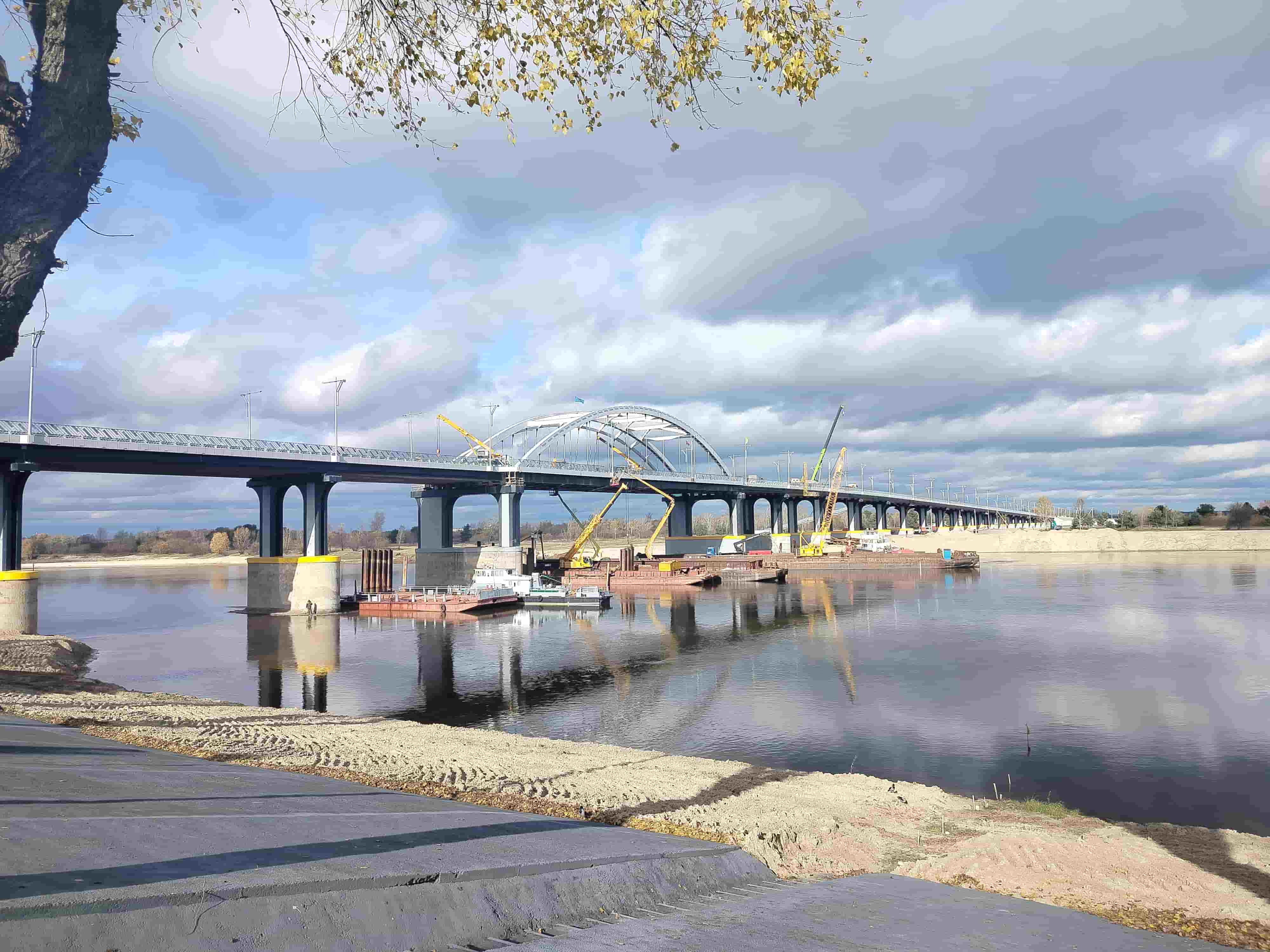
Today, the port area is 14.9 hectares, the water area is an artificial backwater with a depth of about 3.5 m and a berth front of 346 meters. The main activities are the transportation of goods and passengers by inland waterway transport, and cargo handling.
The port carries out transit and local transportation of goods, including crushed stone and construction sand, as well as passenger transportation. During the 2018 navigation season, 246.4 thousand tons of cargo and 30 thousand passengers were transported.
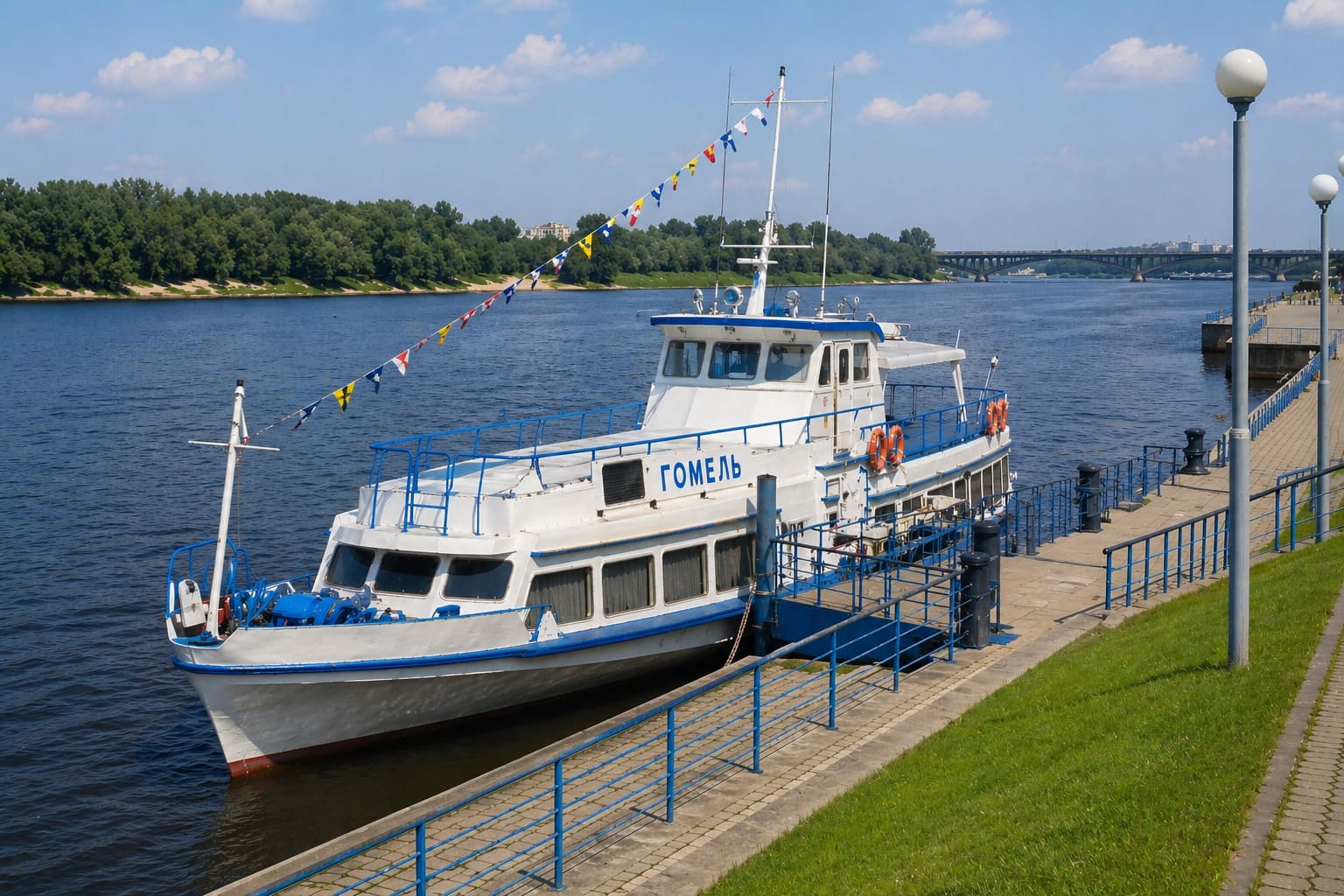
The passenger ship 'Pinsk' of project R-51E carries out excursion cruises along the Pina and Pripyat rivers. Over the years of operation, it has carried more than 3 million passengers.
Highly qualified specialists work in the port - navigators, mechanics, electrical mechanics and machine operators. A number of employees have been awarded the 'Honest Transporter' badge of distinction from the Ministry of Transport and Communications of the Republic Belarus.
Today, the Pinsk River Port continues the traditions of river transport veterans, developing its production potential and performing work of any complexity, remaining an important element of the region's transport system.